
Retail investors have become a force to reckon with in the last 10 years with their ownership of Indian equities rising 800 basis points, or 8 per cent, to 23.4 per cent during this period, suggests a recent note from Morgan Stanley. This number, Morgan Stanley said, is set to rise in the next few years as Indian households are still underinvested in equities. India's demographics, policy framework, investor education and modest positive real rates, it said, will fuel the 'equity cult' in India.
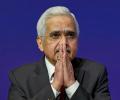
Outgoing Reserve Bank Governor Shaktikanta Das said on Tuesday that restoring inflation-growth balance is the most important task ahead of the central bank. Addressing a press conference on his last day as the central bank chief, Das said his successor will have to navigate the changing world order, effectively deal with cyber threats, and focus on harnessing new technologies.

Fitch Ratings on Tuesday said the FY25 Budget demonstrated the government's ongoing commitment to reducing fiscal deficit and ensured policy continuity during the NDA government's new term. Finance Minister Nirmala Sitharaman on Tuesday presented the first Budget of the Modi 3.0 government in which she revised the deficit target for current fiscal lower to 4.9 per cent of the GDP, from 5.1 per cent projected in the interim Budget.

The country's current account deficit widened to 4.4 per cent of the GDP in the quarter ended September, from 2.2 per cent GDP during the April-June period, due to higher trade gap, as per data released by the Reserve Bank on Thursday. "India's current account balance recorded a deficit of $36.4 billion (4.4 per cent of GDP) in Q2:2022-23, up from $18.2 billion (2.2 per cent of GDP) in Q1:2022-23 and a deficit of $9.7 billion (1.3 per cent of GDP) a year ago [i.e., Q2:2021-22]," the RBI said.

The Prime Minister's Economic Advisory Council (PMEAC) expects the economy to grow by over 7.2 per cent during the current fiscal and exceed 8 per cent in 2010-11, thanks to increased economic activity.

'He will be remembered more for what he did as finance minister -- as someone who functioned well when the political fallout was taken care of.'

Gold imports more than doubled in August to a record high of $10.06 billion, mainly on account of a drastic cut in customs duty and ongoing festive demand, according to the Commerce Ministry data. Gold imports stood at $4.93 billion in August 2023. On record high imports, Commerce Secretary Sunil Barthwal said that the tariff rates on gold have been reduced drastically so that smuggling and other activities can come down.

From the 30-share blue-chip pack, Zomato cracked nearly 7 per cent. Power Grid, Adani Ports, Tata Steel, NTPC, Tata Motors, Tech Mahindra, Mahindra & Mahindra, Asian Paints, Sun Pharma and UltraTech Cement were the other major laggards. In contrast, Axis Bank, Hindustan Unilever, Tata Consultancy Services and IndusInd Bank were the gainers.

The Indian economy would grow by 6-6.5 per cent in the current fiscal despite being affected by the global financial crisis and drought in the country, Prime Minister Manmohan Singh said on Tuesday.

The government's capital expenditure in the April-November period of financial year 2024-25 (FY25) continued to contract with a 12.3 per cent decline year-on-year (Y-o-Y), according to data released by the Controller General of Accounts on Tuesday.

Listed companies' net profit as a percentage of gross domestic product (GDP) has hit a decadal high and is expected to edge even higher over the next two financial years. According to an analysis by ICICI Securities, India's Inc net profit stood at Rs 8.4 trillion, or 4 per cent of GDP of Rs 210 trillion for the trailing 12-month period ending September. This is the highest since financial year 2011-12 (FY12), when it was at 4.6 per cent.

The average cost of data breaches in India reached $2.18 million in 2023, marking a 28 per cent increase since 2020, according to the Reserve Bank of India's (RBI) Currency and Finance report for 2023-24. The report said that India's average data breach cost was still below the global average. The most common attacks in India are phishing which was at 22 per cent and stolen or compromised credentials was 16 per cent. The automotive industry is highly vulnerable to cyber attacks, whereas the banking and financial services sector, benefiting from stringent regulations, enjoys comparatively stronger protection.

'There's a misconception that all Rs 1 lakh crore will be spent immediately, leading to higher consumption of FMCG goods, travel, and vehicle purchases.' 'While some of this money will go toward consumption, not all of it will.' 'The impact depends on where people deploy their savings.'

Hurt by a contraction in mining and manufacturing.

'If the Trump administration decides to put guardrails on H-1B visas, that will surely impact both US and Indian firms.'

If Saudi Arabia, with just two Muslim holy sites of Mecca and Medina, can create a huge tourism-based ecosystem beyond oil, Ayodhya is sure to become the world's hottest religious tourism site in less than a decade, predicts R Jagannathan.

'Nearly 10 million people will benefit from the increase in the rebate limit for those earning up to Rs 12 lakh.' 'We expect all that money will come back into the economy in either savings, consumption, or investments.'

Credit-focused SIFs with lower minimum investment thresholds can provide a more practical option for investors with higher risk appetite, suggests Subodh Rai.
India's GDP growth is likely to slow down over the next couple of years as a result of restrictive policies -- manifested as higher interest rates and fiscal tightening -- aimed at curbing inflation, a World Bank report has said.

After depreciating 0.32 per cent against the dollar in October so far, the rupee is expected to hold ground against the greenback in the current quarter on the back of robust inflows. According to the median of a Business Standard poll of 10 respondents, the rupee is seen trading around 84 per dollar till the end of December. "In India's case, at least the bond and cash related inflows will continue.

Capital markets are becoming more prominent in India's growth story, with an expanding share in capital formation and investment landscape on the back of technology, innovation and digitisation, according to the Economic Survey 2023-24 tabled in Parliament on Monday. Further, Indian markets are resilient to global geo-political and economic shocks, it added. "Despite heightened geo-political risks, rising interest rates and volatile commodity prices, Indian capital markets have been one of the best performing among emerging markets in FY24," the Economic Survey said.

'Our attempt to honour the taxpayer has been since 2014 and more actively since 2019-2020 onwards.'

It has been a slow year for the Indian media and entertainment (M&E) business. After two years of double-digit growth, it grew at just about 8 per cent in 2023 over 2022. It now stands at Rs 2.33 trillion in advertising and pay revenues.

The Reserve Bank of India on Thursday opted for a pause second time in a row, maintaining key benchmark policy rate at 6.5 per cent as inflation moderates. The rate increase cycle was paused in April after six consecutive rate hikes aggregating to 250 basis points since May 2022. Announcing the bi-monthly monetary policy, RBI Governor Shaktikanta Das said the Monetary Policy Committee (MPC) unanimously decided to keep the rate unchanged at 6.5 per cent.

Moody's Investors Service on Friday slashed its estimate of India's GDP growth during the 2020 calendar year to 2.5 per cent from an earlier estimate of 5.3 per cent, on account of the rising economic cost of the coronavirus pandemic.

Gross GST collections grew 8.5 per cent to over Rs 1.82 lakh crore in November on account of increased sales spurred by the festive season.

With the fiscal deficit target staring at the government, the FY25 Budget has limited expenditure options, points out A K Bhattacharya.

The combined wealth of India's dollar billionaires is now equivalent to 33.81 per cent of India's nominal GDP.

S&P Global Ratings on Wednesday cut India's growth projection for the current fiscal to 7.3 per cent from 7.8 per cent earlier on rising inflation and the longer-than-expected Russia-Ukraine conflict. In its Global Macro Update to Growth Forecasts, S&P said inflation remaining higher for long is a worry, which requires central banks to raise rates more than what is currently priced in, risking a harder landing, including a larger hit to output and employment. S&P had in December last year pegged India's GDP growth in the 2022-23 fiscal, which began on April 1, 2022, at 7.8 per cent.

The government has revised gold import data, bringing down numbers for November by $5 billion to $9.84 billion, possibly to rectify double accounting of inbound shipments. According to revised data of the commerce ministry arm Directorate General of Commercial Intelligence and Statistics (DGCIS), gold import numbers have been slashed since April 2024, revealing excess imports of about $11.7 billion during the first eight months of 2024-25.
Continuing the upswing on the strength of the good showing by manufacturing sector, the economy grew by 9.3 per cent during the April-June quarter of the current financial year.

Sectors such as electronics, pharmaceuticals and automobiles can see supply disruptions in value chain, which may lead to a derailment of the domestic economic growth.

'I am optimistic about the Budget because of the fiscal discipline the government has committed to.'

The RBI under former governor Shaktikanta Das resisted pressures to cut interest rates through 2024 as it kept its 'Arjuna's eye' trained on inflation, but the central bank under a new detail-oriented head will soon have to take a call if it can continue sacrificing growth. Das, a career bureaucrat who in 2016 oversaw Prime Minister Narendra Modi's highly disruptive demonetisation move, left a lasting legacy as he demitted office towards the end of 2024 after expertly navigating monetary policy for six years, the highlight of which was steering India's recovery through the pandemic.

'The structural story of India is a multi-decadal story.' 'One should stay invested in that story and avoid reacting to what is happening globally.'

From connectivity woes to infrastructure advancements and the startup boom, there is a gulf between claims and reality in India's economic landscape, points out Devangshu Datta.

India can sustain 8 per cent annual GDP growth and the conducive macroeconomic configuration may become a launching pad for a step-up in the country's growth trajectory, said an article on the 'State of Economy' in the central bank's March Bulletin published on Tuesday. Over the period 2021-24, gross domestic product (GDP) growth has averaged above 8 per cent. The global economy is losing steam, with growth slowing in some of the most resilient economies and high frequency indicators, pointing to further levelling in the period ahead, said the article authored by a team led by RBI Deputy Governor Michael Debabrata Patra.

The travel and tourism sector's contribution to global gross domestic product will return to pre-pandemic levels by the end of 2024, according to a new report by the World Economic Forum (WEF) on Tuesday. This recovery is driven by a considerable increase in worldwide demand, coinciding with more available flights, better international openness, and increased interest and investment in natural and cultural attractions.
